
The Toy Purge: How We Decided What To Keep Vs Donate
In my day job as a Co-Founder and Chief Business Officer, I deal constantly with inventory bloat.
If a company over-purchases raw materials without an optimized outflow strategy, warehouses overflow, capital gets tied up, and the operational space becomes choked. Efficiency drops to zero.
Yet, for the past two years, I was running an incredibly lean machine at my MarTech agency while drowning in an unmanaged, compounding sea of plastic, plushies, and cardboard at home.
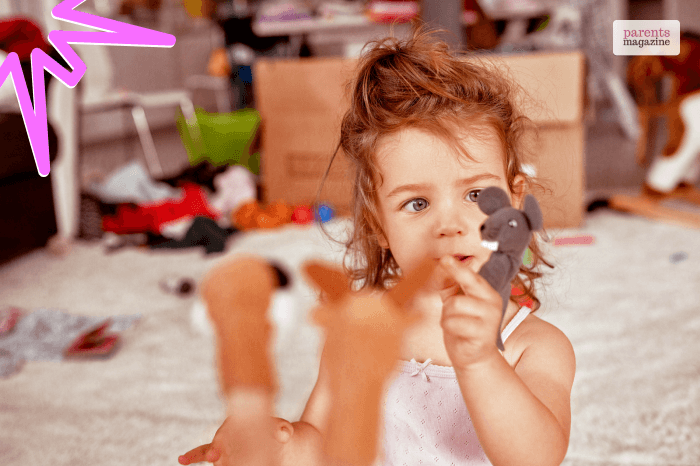
Our house was being overtaken by toys. It felt like every square inch of our living space was being occupied by miniature strollers, block sets, and stuffed animals.
When you look up standard decluttering tips for families, most experts tell you to wait until your child goes to sleep, grab a trash bag, and ruthlessly throw everything away.
But as a Logistics Pro, I know that an uncoordinated purge without an underlying framework is a temporary patch, not a system fix.
Managing toy clutter requires balancing spatial logistics with deep emotional intelligence.
You have to honor your family’s love, preserve precious milestones, and respect the dignity of the people receiving your items.
Here is the exact operational framework we used to overhaul our home’s inventory, build custom storage architecture, and run a high-dignity toy purge.
The Multi-Generational Influx: When Love Outgrows Your Square Footage
Every supply chain assessment requires analyzing the intake pipeline. Where is the inventory coming from? In our case, the intake was fueled by pure, unadulterated family love.
My daughter is the first girl born in three generations on my side of the family.
To say she is loved by one and all is a massive understatement. She is the crown jewel of her grandparents, aunts, uncles, and cousins.
When you combine that level of familial adoration with traditional milestones, birthdays, holidays, festivals, and achievement celebrations, the velocity of incoming packages becomes staggering.
Over a brief two-year window, the total volume of toys received by my daughter accumulated at a pace that far exceeded the practical square footage of our home.
Our living room didn’t look like a home; it looked like a distribution fulfillment center for a major toy manufacturer.
As a father, you never want to suppress your family’s desire to shower your child with love.
But as the manager of the household ecosystem, I had to accept that our physical space had reached max capacity.
We didn’t have a lack of love; we had an operational storage deficit.
The Memory Vs. Cleanliness Paradox: The Emotional Weight Of Family Decluttering
Decluttering toys is inherently difficult because every object is tied to a milestone.
You look at a simple plastic rattle and remember the first time she smiled. You look at a tiny plush dog and remember her learning to crawl across the rug beside our Labrador.
Parents often get paralyzed by a tough choice: do you preserve the memory by holding onto a special item forever, or do you clear the space by giving it away?
We solved this problem through an unconventional real estate play when we recently shifted to our new house: The Grandparents’ Annex.
When we moved, we made a strategic operational decision to leave her bedroom in her old house exactly how it was.
We did not pack or move a single toy, book, or plaything from that room. We left the inventory perfectly intact.
The result has been a phenomenal win for our family dynamics.
Whenever we go back to visit her grandparents’ house, my daughter walks into her old room and instantly falls back in love with all her old things.
It feels brand new to her because she hasn’t seen it in weeks.
This infrastructure shift allowed us to preserve her early childhood history in a living time capsule, completely freeing up the spatial capacity of our new home without triggering any parental heartstrings or emotional friction.
The Duplication Problem: Auditing The Multiples
Because my daughter is celebrated heavily across multiple family circles, we quickly ran into an optimization nightmare: Massive product duplication.
At one point, we found ourselves storing three identical baby strollers, multiple booster eating chairs and tables, duplicate car seats, and stacks of identical coloring books and Lego sets.
Storing three identical utility variations is a massive waste of real estate. We instituted a strict operational policy: The Master Copy Rule.
For every duplicate category that enters our household, we perform a quality audit. We select the absolute best, most durable set to keep as our internal standard.
The secondary and tertiary sets are immediately diverted out of our inventory pipeline before they can be opened, unboxed, or scattered across the floor.
They are tagged immediately for external distribution while they are in pristine condition.
Redefining The Ethics Of Giving: The Case For Brand-New Donations
This is where my personal morality framework diverges heavily from standard decluttering tips for families found online.
Most parenting blogs suggest that you should take your child’s heavily used, chewed-on, and slightly broken toys and dump them at a local shelter or charity.
I have a fundamental moral issue with this practice. I do not believe in giving away anything that has been heavily used or abused by my child to someone less fortunate or underprivileged.
Dignity is not a luxury reserved for those who can afford it.
When we decide to donate to underprivileged kids, we always give something that is brand new.
If my daughter receives a duplicate set of Lego or a pristine, unopened coloring kit, that is what goes into the donation box.
If a toy has been loved and played with by my child, it either stays in our family ecosystem or it is recycled.
When we give to our community, we offer the same premium standard of quality that we would expect for our own daughter.
It keeps our charitable pipeline clean, highly ethical, and deeply respectful of the recipients.
Domestic Inventory Architecture: Designing Custom Storage In The New House
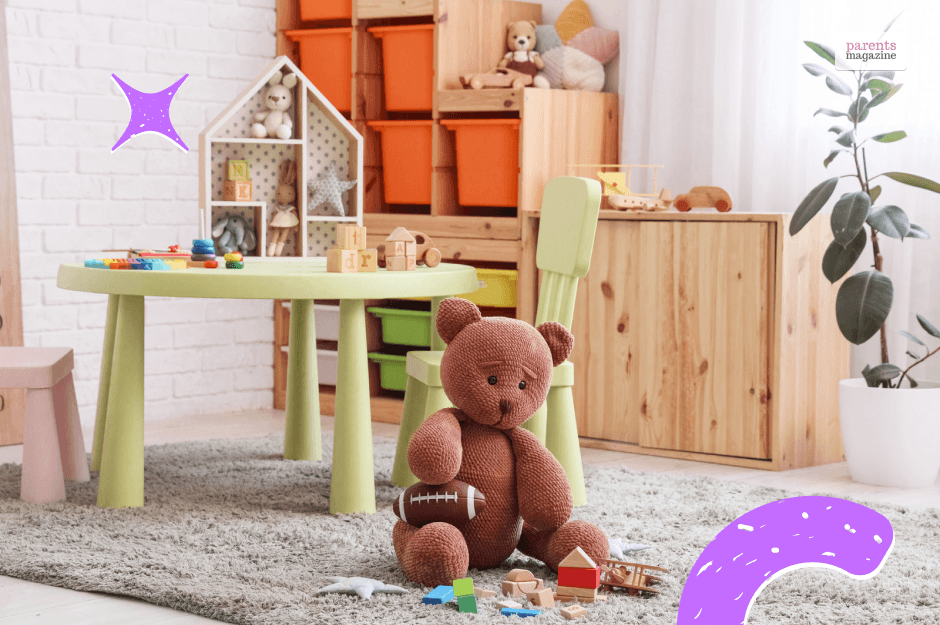
When we designed the layout of our new house, I applied my logistics background directly to our interior architecture.
I knew that toys would continue to arrive, so we needed built-in physical storage to systematically manage both active and passive inventory.
● Active Storage: The Under-Bed Recovery Slot
For her day-to-day toys, blocks, and reading books, we wanted them accessible but completely invisible when not in use.
We intentionally purchased a custom bed frame designed with deep, integrated storage tracks underneath the mattress.
This is our ‘Active Inventory’ zone.
At the end of the evening routine, right before she goes to sleep in her own bed, all her open playthings are cleared off the floor and slid under the bed.
It maintains a clean, pristine visual line in her room, reducing sensory stimulation before sleep while keeping her favorite items within her reach during the day.
● Passive Warehouse: The Corridor System
For our unused inventory, seasonal books, and future games, we built a massive, custom-integrated wardrobe directly into the corridor space outside her bedroom.
This acts as our central domestic warehouse. We use this space to run a Phased Toy Rotation System.
Instead of dumping 50 toys in her room at the same time (which causes choice paralysis and immediate clutter), we keep 80% of her inventory locked away in the corridor warehouse.
Every two weeks, we retire three toys from her room into the warehouse, and pull out three new ones from the corridor.
To her, it feels like a constant influx of new gifts, keeping her highly engaged, while our actual household footprint remains beautifully minimal and clutter-free.
Confronting Executive Consumerism: Auditing Our Own Overbuying Habits
It is easy to blame grandparents and relatives for toy clutter, but a true leader always looks at their own operational shortcomings first.
When my wife and I looked at our expenses, we had to admit that we were major contributors to the inventory problem.
We were caught in two distinct consumer traps:
● The Dad Trap (The Toy Obsession):
As the primary earner dealing with work stress, I was guilty of constantly buying her new toy cars, learning blocks, complex board games, and premium coloring pencil sets. It was my way of overcompensating for my 14-hour days away from home.
● The Mom Trap (The Accessory Obsession):
My wife was equally guilty of over-purchasing clothes, miniature shoes, and styling accessories for our daughter, running up a high wardrobe inventory that she would outgrow in a matter of weeks.
We were celebrating our daughter through retail velocity. Over the past couple of months, we have implemented hard overbuying curfews.
We forced ourselves to pause before hitting the checkout button on e-commerce apps.
We realized that our daughter didn’t need a new toy every time Dad had a stressful week at the office; she just wanted Dad to show up for the evening tricycle walk.
Conclusion: Systemizing Chaos With Dignity
The ultimate goal of running a toy purge isn’t just to have a clean house; it’s to teach your child how to live an orderly, intentional life.
By setting up structural storage under her bed, running a phased rotation system via the corridor warehouse, implementing the Master Copy rule, and strictly donating brand-new items, we turned our clutter crisis into a high-functioning system.
Our new house feels peaceful, our daughter is more focused during her analog play sessions, and we are managing our space like logistics pros.
Look at your inventory flow today. Build better firewalls, design smarter storage, and protect your home’s square footage.
Frequently Asked Questions (FAQs):
The secret is the Phased Toy Rotation System. If you don’t throw their toys away, but instead move them to a high corridor wardrobe out of sight, they don’t feel a sense of loss. When the toy reappears two weeks later, it feels brand new. You are managing their attention, not just their mess.
We keep those items permanently inside our family ecosystem. They are sent to the Grandparents’ Annex or kept in long-term storage for future use. If we do decide to move them out, we offer them directly to close family cousins who explicitly know the history of the item, preserving transparency.
Redirect their capital. Instead of telling them not to buy anything, which can offend them, give them a specific structural alternative. Ask them to contribute to her education fund, buy passes for experiential activities like the zoo or children’s museums, or buy physical books instead of bulky plastic toys.
Utilize vertical real estate. You can install high, closed floating shelves in your living room or use the top shelves of your existing bedroom closets. The key logistical parameter is that the passive inventory must be completely hidden from your child’s daily line of sight.
We look at engagement metrics. If my daughter hasn’t touched a toy for three consecutive days, that item is flagged for rotation. We ensure she always has a balanced mix of one creative toy (coloring books), one building toy (Legos), and one physical toy in her active zone.
Not at all. Toddlers are highly contextual. To her, her grandparents’ house is a special holiday destination filled with old friends (her original toys). It creates a wonderful sense of excitement and familiarity whenever she travels there.
Replace retail therapy with time therapy. When I have a brutal day as a COO, I close the e-commerce apps and commit to taking my daughter on her evening tricycle walk first thing when I log off. Spending 30 minutes connecting with her fixes the emotional deficit far better than buying a toy online.
Those stay in the active rotation until they are completely filled. Once every single page has been scribbled on and colored, we run a ritual where we thank the book for the fun memories and move it to the recycling bin together, teaching her the concept of items reaching their natural end-of-life cycle.
Avoid toys that have 50 tiny, unattached plastic pieces unless you have the infrastructure to clean them up instantly. They get lost under couches, cause stepping hazards for you and your dog, and significantly increase the time required for the evening cleanup routine. Stick to cohesive, high-quality wooden or magnetic block sets.
Turn it into an operational closing ceremony. We don’t yell or command her to clean. We make it a game at 8:00 PM: ‘Let’s see how fast we can help the toys go to sleep in their under-bed home.’ By modeling the behavior and doing it alongside her, she associates tidiness with structure and safety.









Already have an account?
Sign In
Create your account
User added successfully. Log in